
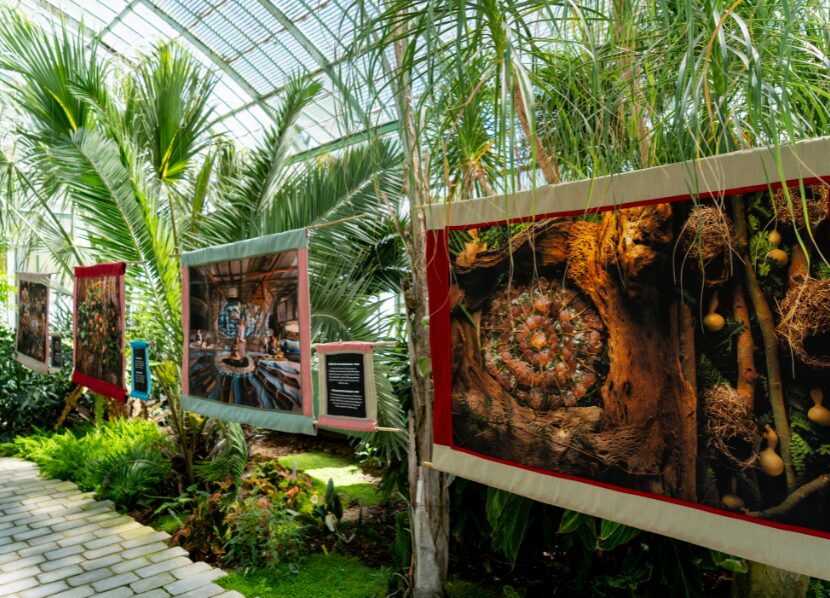
For about two weeks, until July 5, 2026, the Serres d’Auteuil are hosting “Trees of Life”, an exhibition by photographer Nicolas Henry. Produced in Chad and Senegal with the support of By Art, Nexira and SOS SAHEL, the exhibition invites the public to discover trees that are essential to people, animals, soils and ecosystems.
Presented on June 17 as part of World Day to Combat Desertification and Drought, the exhibition offers another way of looking at the Sahel. Far from portraying a region in crisis, it reveals the potential of Africa’s drylands. The exhibition shows the trees, plants, landscapes and communities that keep territories alive despite demanding climatic conditions.
With “Trees of Life”, Sahelian trees become the main characters in a story where biodiversity, culture, food, local economies and land restoration come together.
Trees at the heart of everyday life
In Sahelian territories, biodiversity can be found in the many uses of leaves, fruits, bark, gums, seeds and roots. It is passed on within families, villages, farming practices, stories and the knowledge carried by those who live with these resources.
Behind every tree, there is knowledge, skills, a source of income, links between generations, medicinal or food uses, practices that protect the soil and concrete responses to the effects of climate change.
The exhibition therefore opens a window onto a very tangible reality: Sahelian trees are natural resources, cultural landmarks, economic supports and allies in restoring land.
An exhibition connected to local initiatives on biodiversity and territories
In Sahelian territories, biodiversity can be found in the many uses of leaves, fruits, bark, gums, seeds and roots. It is passed on within families, villages, fara
The exhibition echoes initiatives led by A Better Life par SOS SAHEL in Senegal and Chad, with the participation of the JRS Biodiversity Foundation.
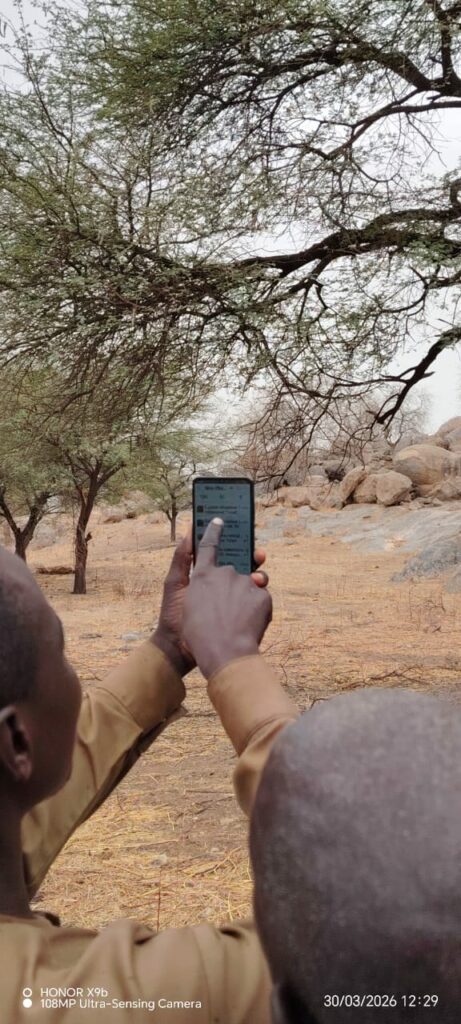
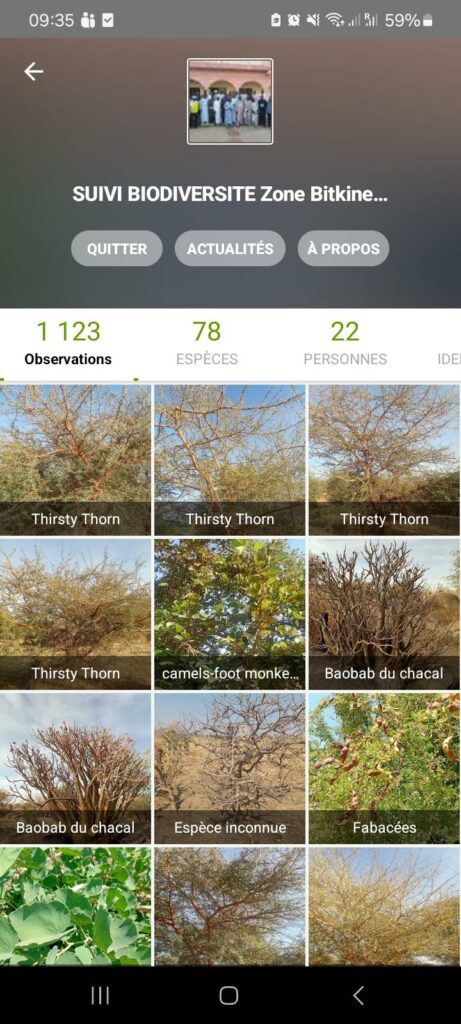
In Dialacoto, in eastern Senegal, near Niokolo-Koba National Park, residents, farmers, teachers, eco-guides, young trainees and researchers are taking part in a citizen science approach. Trained to identify species and use the iNaturalist platform, they record the plants in their territory, document their uses and contribute to a better understanding of local biodiversity. This knowledge will be useful to all stakeholders in the territory.
In May 2026, the first results of this participatory monitoring were shared with elected representatives from six municipalities around the Niokolo-Koba Park ecosystem. These discussions helped connect biodiversity, climate change, food security, cultural heritage and local development. They also highlighted the role of local authorities in preserving natural resources and planning territories sustainably.
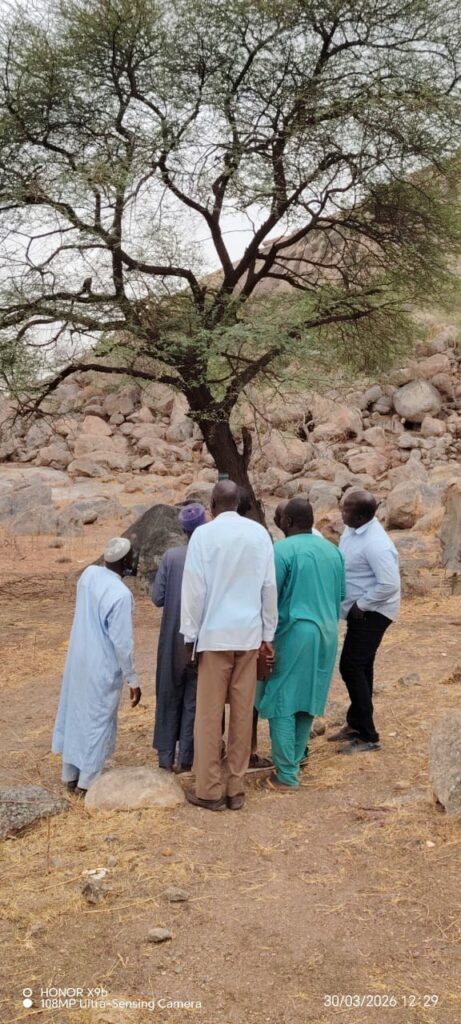
In Chad, in Guéra Province, communities in the Abtouyour department are also taking part in mapping their biodiversity. Twenty-two active observers have already collected more than 3,300 observations and documented 105 useful plant species. Among the most frequently recorded species are the desert date tree, jujube, tamarind and Senegal acacia, which produces acacia gum.
These trees bring direct benefits to communities: food, traditional medicine, soil fertility, additional income, agroforestry and support for households. They show how knowledge of living ecosystems can help protect resources, guide local choices and strengthen territorial economies.
ming practices, stories and the knowledge carried by those who live with these resources.
Behind every tree, there is knowledge, skills, a source of income, links between generations, medicinal or food uses, practices that protect the soil and concrete responses to the effects of climate change.
The exhibition therefore opens a window onto a very tangible reality: Sahelian trees are natural resources, cultural landmarks, economic supports and allies in restoring land.
Acacia, an emblematic tree of Sahelian value chains
Among the “Trees of Life” presented in the exhibition, acacia holds a special place. This tree produces acacia gum, a natural resource found in many everyday products around the world: food, beverages, cosmetics and health products. This gum directly connects rural African communities to international markets.
Acacia is far more than an economic resource. It is a valuable tree for ecosystems. Particularly well adapted to drylands, it develops a dense and deep root system. It helps preserve soil fertility, limit erosion, encourage water infiltration and restore vegetation cover.
For more than ten years, SOS SAHEL and Nexira, the world leader in acacia gum, have worked alongside producer communities in Chad. This cooperation shows how a Sahelian value chain can create economic value, restore soil fertility and strengthen producer organizations.
More than 2 million trees have been planted across 10,000 hectares, 180,000 hectares of forest have been protected, production has increased from 1,500 to 2,600 tonnes, and 29,000 producers are now organized into 128 groups and unions, including 20,000 women. Women’s representation in producer organizations has also increased significantly, from 0 to 30%.
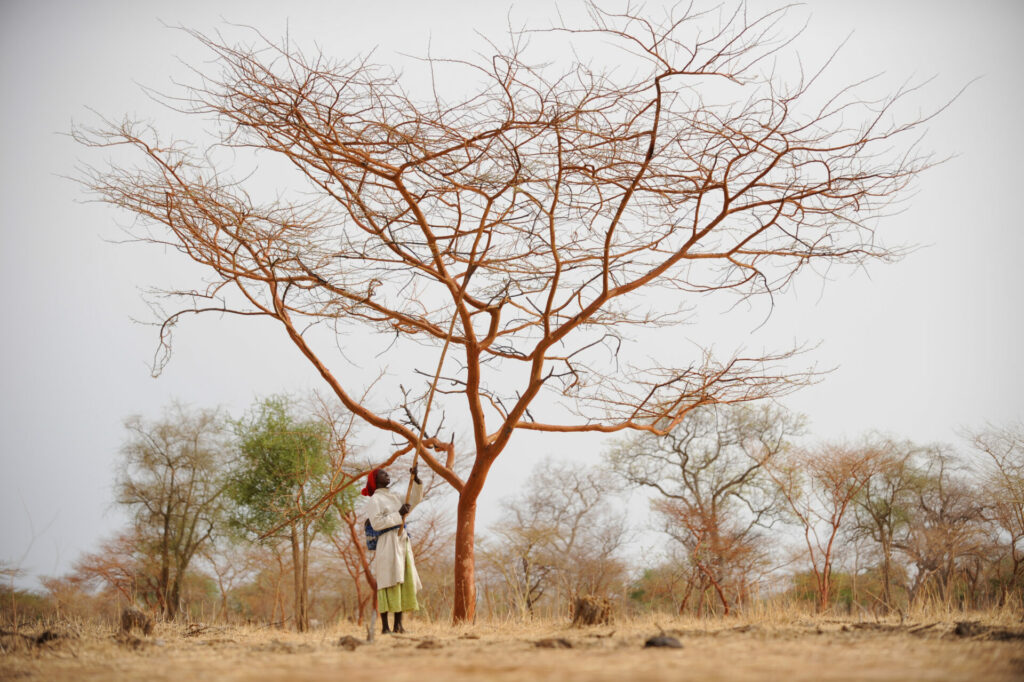
Sahelian trees and the Great Green Wall
The trees presented in the exhibition are part of the Great Green Wall, launched by the African Union in 2007. Initially conceived as a response to desertification, this major initiative for the African continent now carries a broader ambition: to restore land, regenerate ecosystems, develop sustainable economic activities and make Africa’s drylands territories of innovation, production and the future.
From this perspective, Sahelian trees play an essential role in preserving biodiversity and transforming territories. They protect soils, support agroforestry practices, feed families, create income and remind us that local natural resources can be at the heart of solutions to desertification.
By connecting photography, biodiversity, local knowledge and land restoration, “Trees of Life” reminds us that Sahelian responses are rooted in the territories themselves. They grow from the trees, plants and communities that know them, and from the actors who come together to preserve, enhance and pass them on.
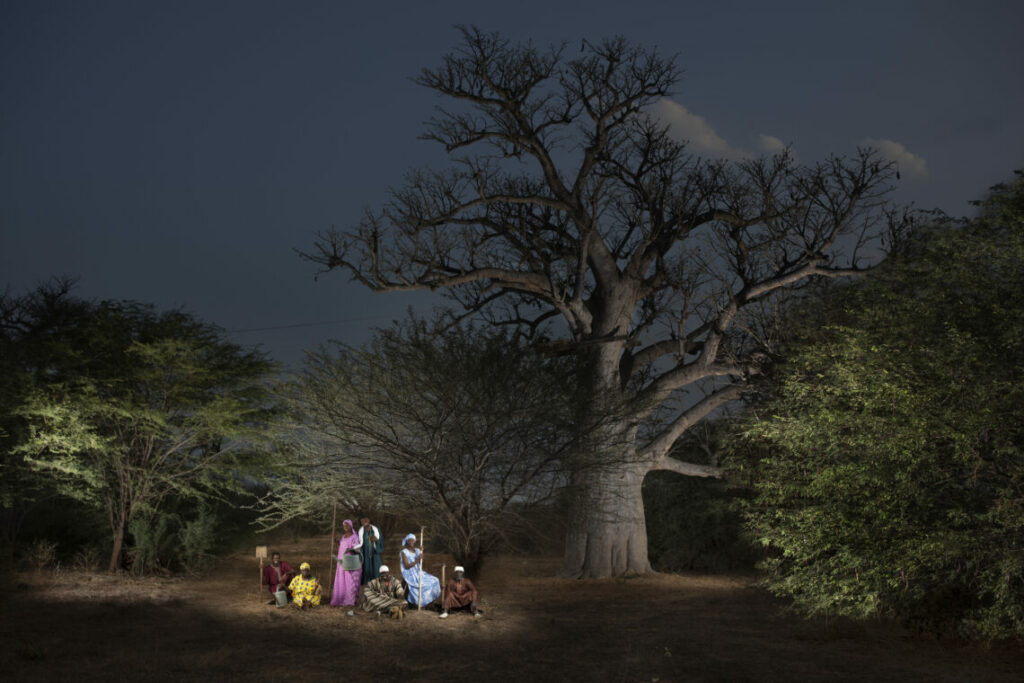
“Trees of Life” exhibition
Photographs by Nicolas Henry
Presented at the Serres d’Auteuil as part of World Day to Combat Desertification and Drought
With A Better Life by SOS SAHEL, the City of Paris, the Paris Botanical Gardens and Nexira.